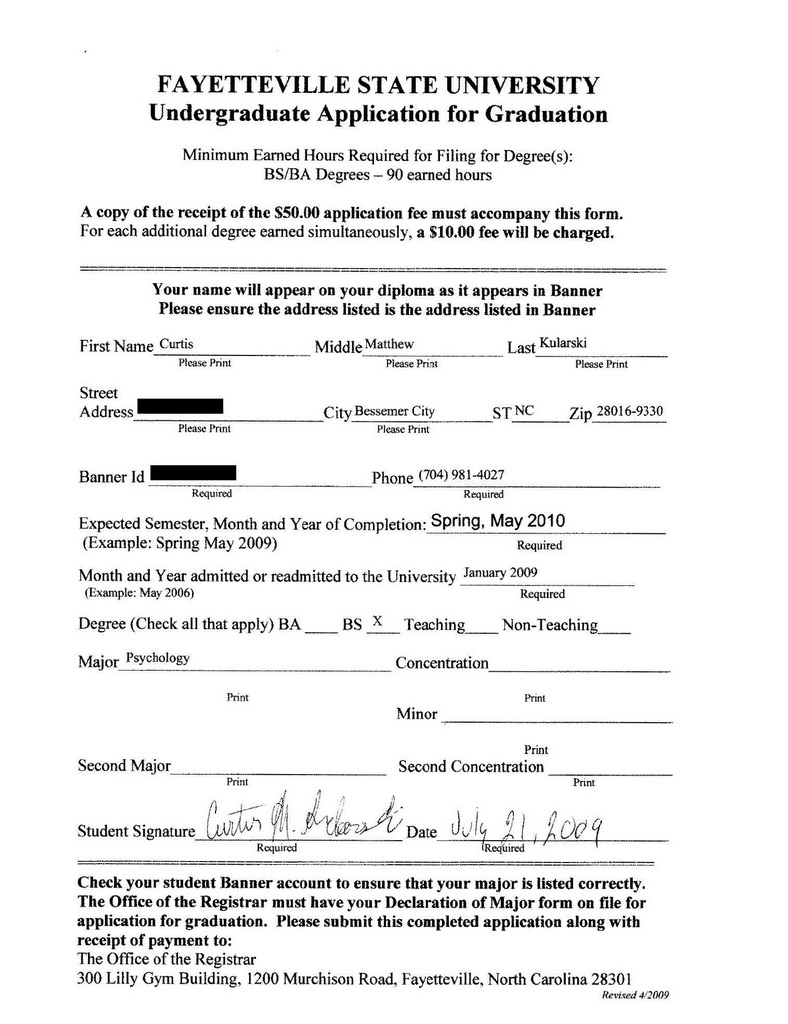
I have filed my petition for graduation at Fayetteville to receive my Bachelor of Science in Psychology during the Spring 2010 semester.
I have filed my petition for graduation at Fayetteville to receive my Bachelor of Science in Psychology during the Spring 2010 semester.
I have finished all of my course work for Statistics and Biopsychology at FSU, and now I am left with nothing to do. I have decided, in this academic dry period to register for PHYS 103 as a self-paced course. It is titled “General Physics II”. It is pretty much the standard 2nd semester physics course. I took the first semester in Fall 2004, and I enjoyed it, but never got around to take the other course, since it was not required. The way this course works is pretty cool. I have a minimum of 12 weeks and a maximum of 9 months to complete the course. I complete the homework, email it to the instructor, and then get grades back through email. When I am ready for an exam, I transmit my request and the exam comes to me. All of this is on my schedule. The course is offered by UNC-Chapel Hill, and while I never have to go on campus for anything, I do have to make arrangements with another school to take my final exam somewhere local under supervision. I decided to finally take this course because I am very interested in optics and the properties of light, partially because of other hobbies. Other topics in the course include electricity, magnetism and quantum physics, all of which interest me at least a little.
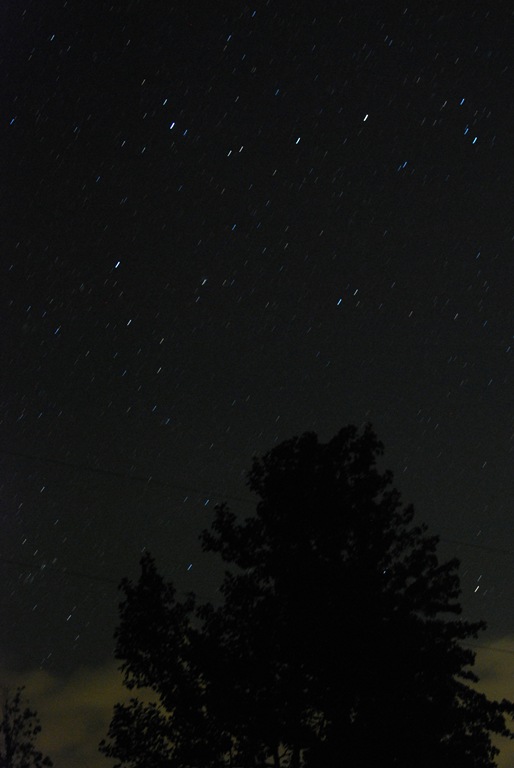
This image is one of my first attempts at astrophotography with the D60. This is through my 70-300mm lens at the 70mm end, in a really dark place (rural Polk County, NC). Apparently all it takes for any type of astrophotography is a dark sky and a long exposure. One thing I encountered but gave no thought to is the impact of the rotation of the earth on the exposure. This image sucks at full size, but is decently cool in smaller sizes.
Oh, how I wish I could take them up on the offer.

I have been fighting with my Orion SpaceProbe 130 on the topic of astrophotography for quite a while now, originally with the midget Nikon N7900, which went ok, then with the Fujifilm S5200, which was worse and then with the Nikon D60, which was almost a nightmare, in all configurations. After visiting my local planetarium (James H. Lynn Planetarium, part of the Scheile Museum of Natural History), I began thinking about the topic again.
Tonight I have looked through Orion’s selection of inexpensive astrophotography rated telescopes. I am looking for something more light weight than my primary telescope, as well as something that is better enabled for the type of activity I want to do. I am having a hard time understanding the specifics of how these things are supposed to work. On the most simple approach, there is to be a naked SLR camera mounted directly as a T-mount to the telescope make it work. In my case, that seems to lead to things being out of focus. In other instances, I have tried mounting with the lens attached, which is a little better, but still not great. Because my telescope is a reflector, I see the mirror and its associated hardware through my viewfinder, which isn’t a very nice effect. I really want to make this thing work, which is why I am considering a scope that is designed specifically for the task.
Another annoyance of my present scope is that its weight causes it to move on the tripod without any intervention, but it isn’t particularly conducive to long exposure imagery, the primary objective of astrophotography (the only way to see nebulae and less dramatic features).
I have decisions to make on the topic and to determine if getting a different scope and/or the associated accessories would be worth my time and the cost.
I have never liked FedEx, anyone around me when I am expecting something from them knows that very well. Now I am faced with an even greater evil than FedEx itself, FedEx SmartPost. It is a service where FedEx bundles all of the packages heading to an area and then sends them there in bulk for later entry into the US Postal Service system for delivery. This seems like a nice system, and it is very cost effective, but there is only one tiny catch, it is very slow. I am presently expecting a package from Adorama (film scanner), it was shipped on July 1st, and was originally due to arrive here on July 6th, but FedEx has managed to push the delivery due date back to July 10th, quietly and without notifying anyone. Packages from Adorama shipped through the postal service only take about 2 or 3 days to arrive.
I do not see any advantage, other than cost, for using FedEx SmartPost, and the increased speed of USPS is certainly worth the additional expense. I never thought I would see a time when I preferred USPS over another carrier.
I’m sorry I have not blogged recently, nothing really noteworthy to say, but yet, I have been extremely busy with my aunt’s party preparations and such.
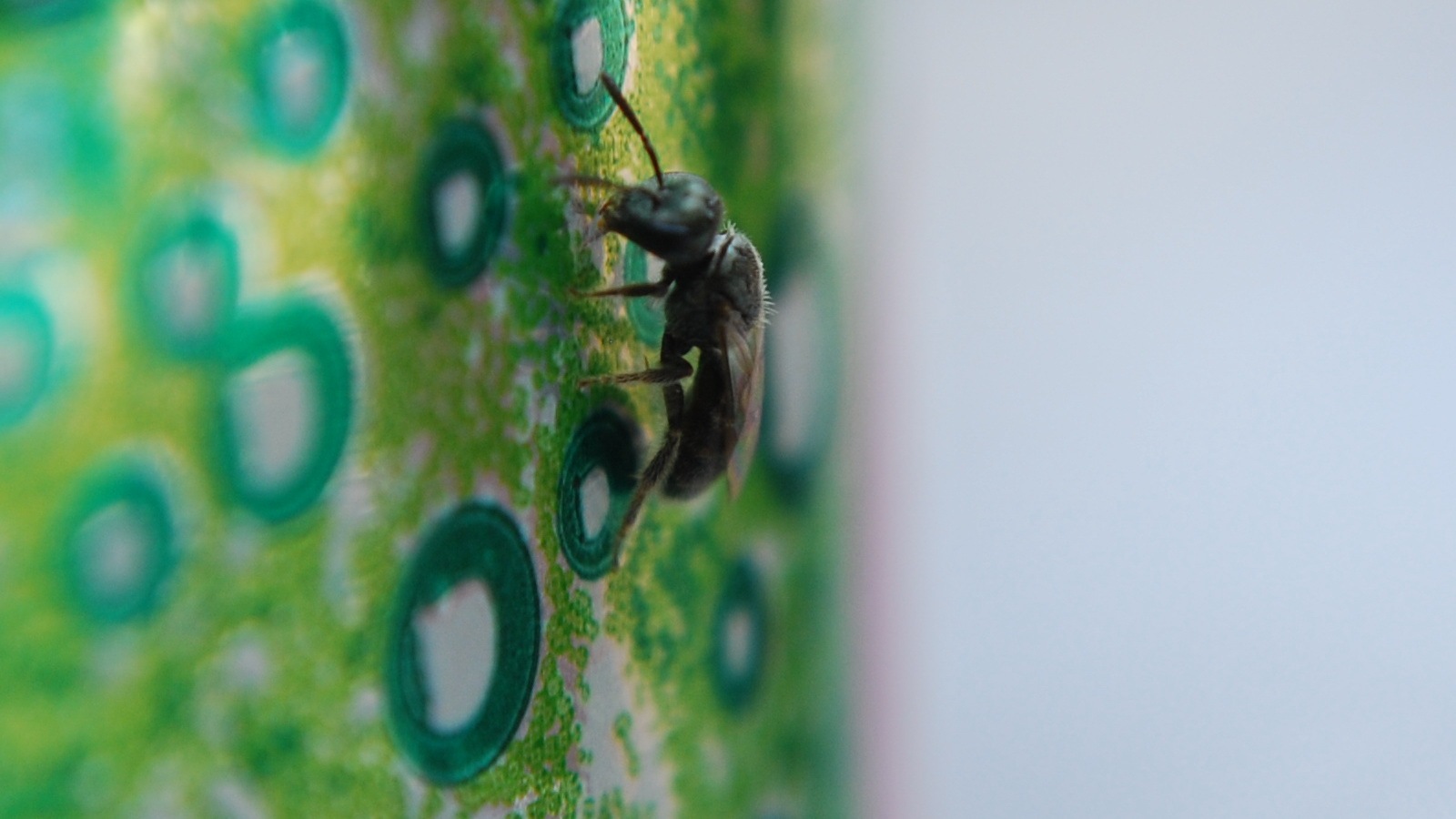
I thought these shots were kind of fun. These are crops at exactly 1600 x 900 as they appeared on my 20” monitor, where I decided they looked cool. These are crops from the 10.2 MP originals. The shots were taken while sitting on a swing by my aunt’s pool.
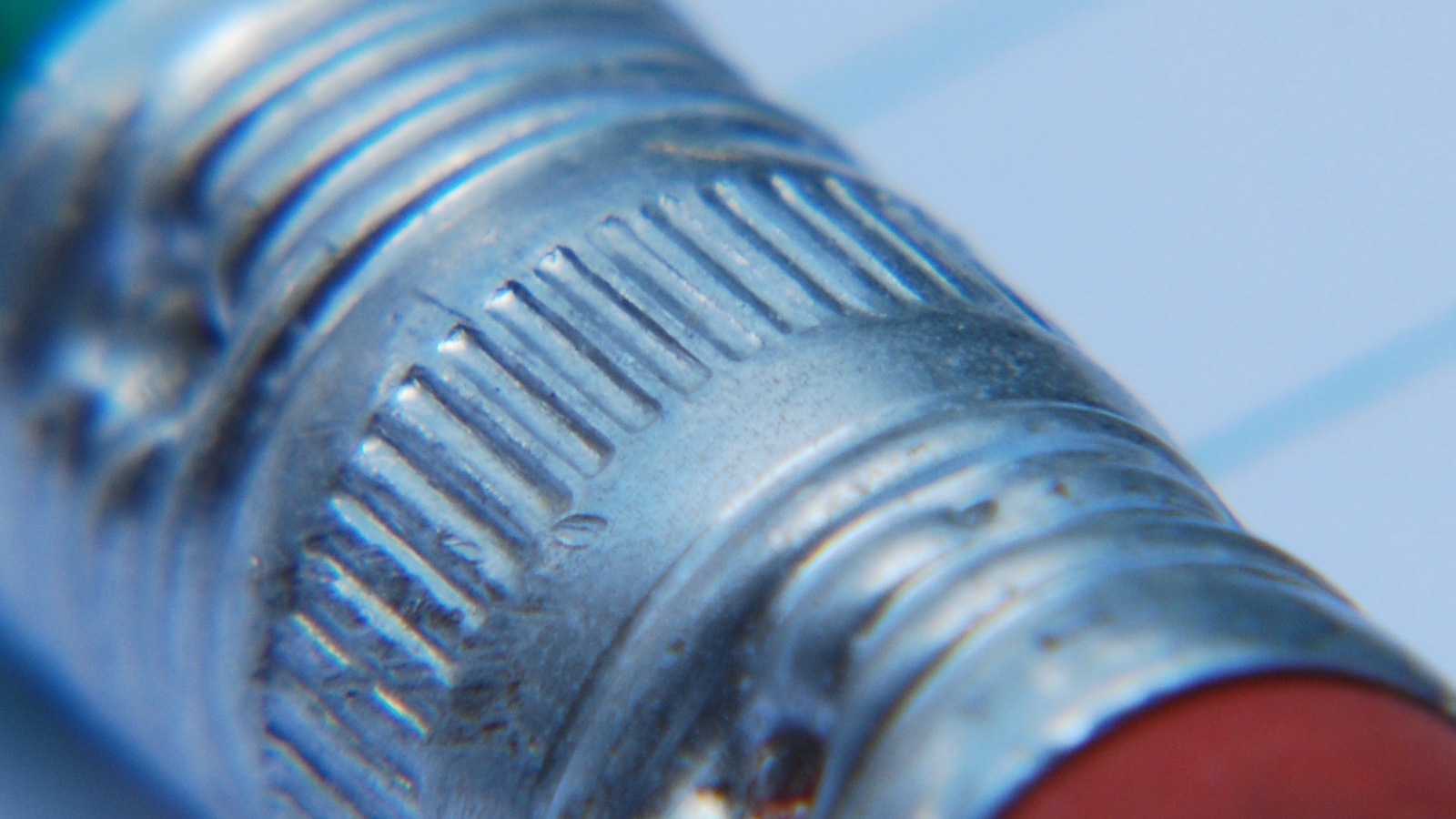

The new lens arrived this morning. Amazon listed the item as “unknown delivery date” until sometime Wednesday evening, and then on Thursday before I returned home, the lens had shipped and it arrived today. This lens concludes the summer upgrades to my camera system. At this point the lens has only been used for about 18 shots, since the weather has been less than ideal for f/1.8 images today, and this evening at dusk (a good time for the lens) I was busy with a Statistics test.
In a complete irony, an Introduction to Optics textbook that I purchased recently arrived today as well. It was interesting to read how the f-number is calculated.
From the few images I have taken with the new lens I must conclude that it definitely lets a lot of light in and creates an interesting depth of field. It also seems as though the D60 has a few issues metering with the lens, since the automatically metered modes read things a little overly bright.
It is somewhat difficult for me to work with a static prime lens on the D60, since I have gotten so used to sitting still to compose and then zooming to adjust. Now I have a lens that will essentially do nothing notable except let light in, but in photography, that in itself is a wonderful thing.
Here is a sample image, it is Chris holding the 18-55mm lens, which was mounted on the D60 at the time the new lens arrived.
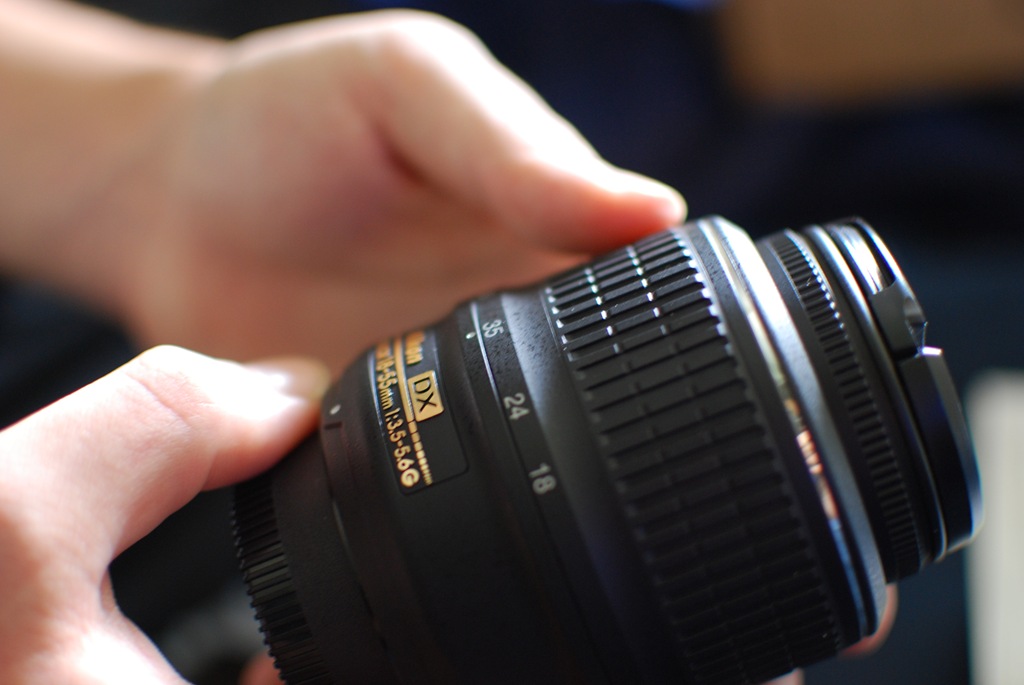
The image is a little overly bright and not as sharp as it could be, probably due to the fact it is too bright (too many stops too slow). My only complaint with this lens is that it is not a VR lens, but oh well, the faster lens speed is supposed to make up for that. While at first I wasn’t sure about using flash with this lens, I now think it might be an interesting thing to try, if for no other reason, just to see how low of a power the flash has to use to match what is needed.
Primarily this lens will be used for portraits, macro and landscapes. It is equivalent to around 50mm on my D-SLR.
As a network concept for a potential change in network hardware, to more fully utilize available client systems, the idea of a gigabit router was proposed, and doing one with Wireless N support seemed like a great idea. My question on this topic is now, who designs these things?
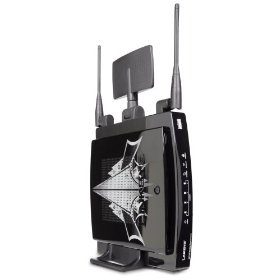
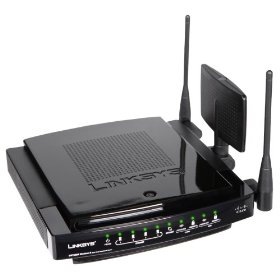
These things look like spacecraft and are a little intimidating. The projections from the side/top of the things are the biggest issue, but since when are routers black, especially shiny black? I guess one will match my new PC.
The router I am currently looking at is this:
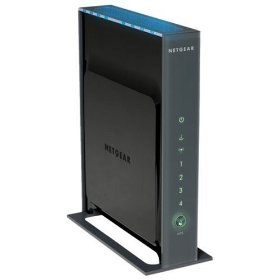
Its a Netgear and looks like a textbook, but I can deal with that. My only concern is the lack of any visible antennae… which I have been told are quite important for the operation of a wireless device.