Category: Photography

  • ART390 – Final Project Proposal

         The world is full of big things, everyone wants to go bigger whether it be buildings or sculptures. In our world, bigger has become better. Imagine a world where even the smallest details mattered. Veins of leaves, the wings of bees, or the smallest creases in the leather of a boot all have a chance to stand out and be visible to the "big world". Macro and close up photography allow this to be possible.
         I will use a variety of close up filters as well as a macro lens to discover the hidden world of things tiny and minute. My primary subject for macro photography within the scope of this project will be nature and natural things. I will focus on the fine details of natural objects and attempt to show pattern where it exists. I will be avoiding anything that brings scale to the project. A lot of human identification of objects occurs with scale. I plan to take advantage of this psychological "deficiency" to give the viewer an opportunity to see the image in a very raw way and develop an opinion of the photo before identifying the subject. After each series of images with a single subject at macro range, I will also make an image farther from the subject, allowing the viewer an opportunity to "recover" from the closeness to the subject. In both the main images as well as the "overview" I will be using a short depth of field to draw focus to only the subject.
         I selected this topic for the project because of numerous experimental images I have taken using some close up and macro techniques. I was inspired by the level of success I have had with those experiments. I have a personal connection to this topic through an aesthetic appreciation of fine detail and larger than life pictures.
         My audience is anyone who enjoys nature photography or would like to see things closer. My biggest critics are my family and friends, and as a beginning artist they are the first audience of all of my work. At this stage in the development of my photography skills it is still important for me to consider my family as a relevant audience. I want my work to be something they will be proud to display. I have no preferred place for these images to be displayed at this time.
         The research required involved numerous Google searches to find example images to help me decide on angles to use, as well as to determine some common subjects. In addition I have used several text resources from the Sloane Art library at UNC, including "Closeup shooting : a guide to closeup, tabletop, and macro photography" by Cyrill Harnischmacher.
         I am new to the field of photography and do not have a lot of information about what other photographers work in macro and close up photography, but a little research led me to discover that the author of the text for this course, Jim Miotke has worked with macro nature photography. Ann Fischer Carol is also very active with macro photography, and is responsible for one of the few photography books dedicated completely to macro flower photographs. It seems to be a fairly popular form of photography, especially in the digital era.
         The most common problem with macro photography is the requirement of a narrow aperture, which requires more light to correctly expose an image. The next most common problem is the short focus range. The closest it is possible to get with "common methodology" is about 4 inches from the subject. Using special lenses will both amplify the available light and allow closer focus. Extending the distance between the camera and the lens with an adapter tube will also result in a shorter focusing distance.
         This project will be a rewarding challenge for me to work on. I am very excited about my topic and the possibilities that exist with working in such a "small world".

    ————–

    This is posted here because Flickr fucked up my original posting of this to the class discussion board.  Angry

  • ART390 Final Project Selected

    For digital photography I have decided to do a macro photography series for my final project. I am still working on the details of the project, but the general idea will be a series of distinct images that showcase what macro photography can do. I have to complete my project by July 22. I think I am going to have a lot of fun looking for little things to photograph. I’ve already started playing with bees and of course the fine details of flowers.

  • Photography – Lesson 8

    Lesson 8 - Image 1Lesson 8 - Image 2Lesson 8 - Image 5Lesson 8 - Image 3Lesson 8 - Image 4
    "Take 50 shots of light, reflections and shadow, select 5"

  • Photography – Lesson 7

    Lesson 7 - Image 6Lesson 7 - Image 1XLesson 7 - Image 2Lesson 7 - Image 3Lesson 7 - Image 4Lesson 7 - Image 5Lesson 7 - Image 1
    "Take 36 shots of an object, select 6"

    Lesson 7 - Image 8 Lesson 7 - Image 7
    "Take an image twice, once centered, and then once in a ‘sweetspot’"

    Lesson 7 - Image 9
    "Focus as close as you can to an object"
    (didn’t do this one to its fullest, just because I didn’t want another stamen shot)

  • Reflection on Time-of-day Photos

    I hate my time-of-day pictures from my project this weekend. I think they are redundant and boring. I would have been much happier doing different scenes at the different times… perhaps based on what looks best for each scene. I felt restricted because I needed to be around the same place for 12 hours and I couldn’t see myself hanging around at my preferred landscape (Crowders Mountain) for 12 hours to do the photos, and climbing there 6 times definitely wasn’t going to happen. I think the pictures absolutely suck, but I suppose I will post them to the gallery this evening sometime.

  • Texture Photography

    http://www.disturbingthoughts.net/gallery2/v/album/20080606/

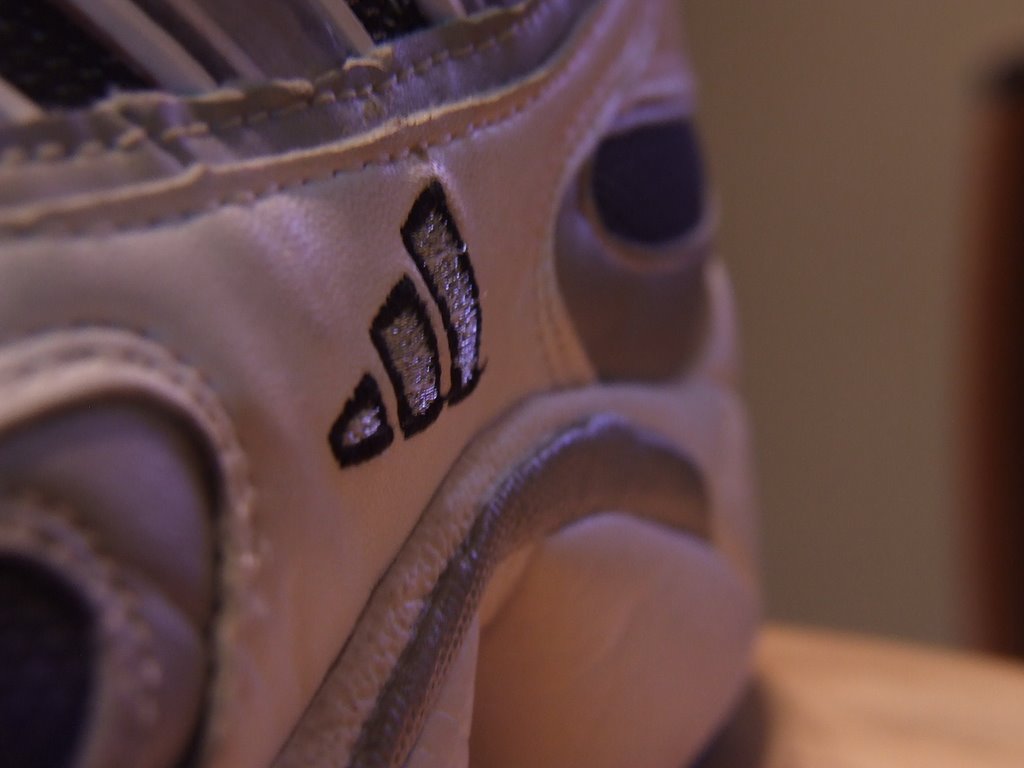
    I had some fun last night with my macro lens and my shoes, capturing some texture. Some of the images may be a little raw since I haven’t cropped them yet, but I believe they get the point across.

  • Playing with Night Long Exposures


    I’ve been playing with my camera again. This was an optional part of my shutter assignment, using long shutter times to do an exposure at night. I had a lot of fun trying this tonight in my bank’s parking lot. Images are available on Flickr or on my personal gallery.
    If you want to see the one I selected to turn in, see the ART390 Axillary Gallery.

  • ART390 – Lesson 3 and 4

    I have finished posting my Digital Photography assignments for this week, if you are interested, the links are below. I feel like I have had to actually work at some of these images, so I hope you enjoy them.


    http://aux.livecurt.net/art390/main.php?g2_itemId=119


    http://aux.livecurt.net/art390/main.php?g2_itemId=131

  • Lack of Motion

    The problem with living where I do is that everything is calm. The most disturbing thing around is the wind moving flowers and leaves about. Normally this would be a relaxing environment that is pleasant to photo…but this week I need things in motion to make my photography assignment work.
    The most dynamic and moving thing in my life is Chris, and I have already had him running and posing for me for so many shots for motion I would feel guilty asking him to pose in motion for me, or make other things move again. I live near a highway, but nothing really interesting happens there either… my best shot would be to find a fast moving train, and even those are rare and come without warning.
    I have to capture motion in situations where I stop motion, blur motion (background is stable), pan (foreground is stable, background blurs) and perform a long exposure at night. The blur motion is easy when you figure out where to look and the instructions to give your guinea pig. Pan is a little harder… getting the camera and the object moving at the same time is a challenge. The long exposure at night is easy… I just have to find something interesting to go for the long exposure on.. preferably something that emits light. Stop motion will be simple as well, once I find the right thing in motion that I want to stop… I could stop motion on anything… but not just anything will show the absence of the motion but still allow for the knowledge that it is in motion.
    I have to turn in my shots tomorrow night at midnight… I think I will be ready… as long as it doesn’t rain tomorrow I should be able to make it work (tornado would be good though… lots of things suspended in air to capture the stop motion on).

  • Missing What Is In Front of Me

    I have been waiting for a package to arrive from Orion for the past 8 days, today it arrived. From another place, Adorama, I ordered a part as well, it arrived on Tuesday. I ordered both parts on the same day, believing that the parts were compatible parts that needed each other to function. The desired function in this case is to mount my 55mm camera to my telescope’s T-mount (the lens insertion function). The part from Adorama is a 55mm to “standard” adapter. The Orion part is a “standard” to telescope adapter… considered to be a universal part. When the Orion part arrived today I tried to put it together with the Adorama part, as I thought they should fit… they didn’t fit. I became immediately irritated and almost gave up on the whole project.. until I noticed that both adapters seemed to have a common end… a female thread component. I went to my telescope with the Adorama part, lined up the threads and screwed it on… it fit. So… apparently “standard” isn’t really standard… it ended up being that the Adorama “standard” was the standard for telescope lens connections, and the Orion standard is the SLR camera standard…. oops. Either way, I now have a reliable way to connect my camera to my telescope… and apparently I have had that ability for several days.