Crash Course In D-SLR Optics

This post is for Jared and anyone else who needs help digesting my posts.

  • Aperture – Size of opening for light to enter. It is controlled by a combination of physical limitations of the lens tube, as well as aperture blades which can tighten or open at the photographer’s command. Apertures are measured in an “f” number, which has an inverse relationship property. f/1.2 is very wide, whereas f/32 is nearly tiny. While most lenses are physically capable of almost all apertures larger than about f/8, if the optics are not designed for that aperture, then there is no capability of obtaining focus at that range. For that reason, lenses are designated with their largest aperture available in their name, for example, my 70-300mm lens is f/4.5 – f/5.6, meaning that it will have a lens aperture of at most 4.5 at its widest angle (70mm) and 5.6 at its most zoomed angle (300mm). Lenses below f/3.5 or so are usually called “fast” lenses, because they take in more light than lenses with a smaller maximum aperture, making them capable of capturing faster motion and taking much sharper images. At the other end, we have settings like f/32, which is like a pinhole of light, this gives a much deeper depth of field than the smaller numbers ever could, and can also be especially useful in intentional blurs (even in daylight).
  • Focal Length – Length of the tube, kind of. It is a representation of the distance between the front optics and the rear optics after allowing light to bounce around in the tube or something. The technical definition of it is not particularly important, but if you care, see the Wiki article. It is important to note the standardized version of the focal length. Standardized focal lengths are converted from their physical length by multiplying by the camera sensor crop factor, for most DSLR users, that number is 1.5 (Nikon) or 1.6 (Canon). Focal length in general (once standardized) indicates how much you can “zoom” or how wide you can shoot. Below 50mm, it is wide, above 50mm is zoom.
  • Filter Size – Does not affect optics, just a number that says how big the screw is on the front of the lens so you can mount filters or other fun things on it.
  • Elements/Groups – The number of elements is the number of physical pieces of glass that exist in the lens and groups is the number that move together. In general, a more complex optic set will result in a better quality image. 
  • VR/IS – Vibration reduction (Nikon) and Image Stabilization (Canon, Fuji) is a function that will reduce blur due to camera (or operator) shake. It is also useful for taking pictures from moving vehicles or otherwise in a situation where the camera is hand held, not on a tripod. The optics adapt when this function is turned on, it attempts to keep the image centered. In Normal mode, this shake is only up and down, allowing for panned blur. In Active, the image is stabilized in all directions
  • A/M, Auto, M/Manual – Focus modes. Some lenses are manual focus, the photographer must adjust focus him/herself. Some lenses are auto focus, and there is no intervening in the process. More common though, lenses are Manual and Auto switched. You can usually change between manual and auto by a switch right on the lens body. Another mode is A/M, which is an autofocus mode that also allows for photographer adjustment of the focus, in case the auto focus gets it wrong.
Anticipation

Sometimes I feel very childlike. I ordered my new 70-300mm lens yesterday and I am so anxious for it to arrive. It was originally supposed to arrive today, but Amazon Prime One-day has failed me this time. My camera is instead scheduled to arrive here tomorrow by UPS Next Day. I have been thinking about shots I would like to try, and things as random as where in my camera bag I will place the lens. It is not often that I get so eager for something to arrive, but yet at the same time I am nervous as well. I have purchased a $500 piece of hardware to extend my photographic system, but is purposes do not match with what my photographic goals have been lately. I still selected this lens after all of my doubts simply because it is the one that caused me to want to explore upgrade and expansion options for my camera. I will gradually do things to make my system more flexible as I progress, but it  is going to take time for me to adapt to each new addition before I can move on to the next. I do not want to do what I used to have a habit of doing at Christmas, getting overwhelmed by all of the new toys (toys for me have been things electronic since I was about 6), and just picking one that I would obsess over and focus all of my attention on.

I suspect it will take me a few weeks, around 7 or 10 photo expeditions, to fully learn the new lens and its capabilities. After all, I have to learn its behaviors for all of the situations that I have become accustomed to with my present lenses.

Aesthetically Picking A Flash

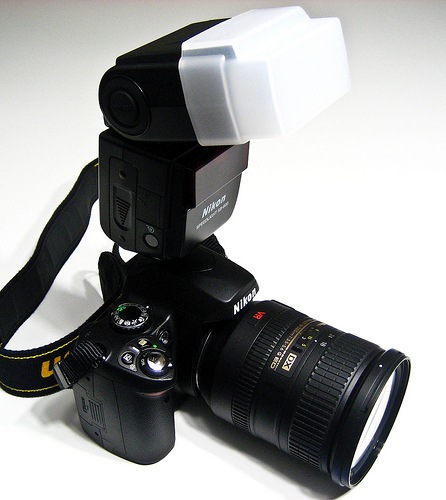
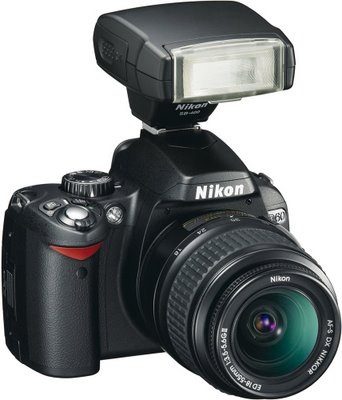
I argued the point a few posts back about which flash I should consider for my D-60. I kept reading about “Camera/Light separation” values, so I went looking to see if I could find pictures of the SB-400 and SB-600 mounted on the D-60. The 600 is below on the left and the 400 on the right. I was OK with the idea of having a slightly large flash on top of my camera, its just a photographer thing, they kind of mount there (on the hot shoe). After looking at the two flash units on the D60, my only question to Nikon is “Is there an SB-500?”. Seriously, I would like something between superubertank (600) and the microbouncer (400).   The idea of picking a flash is starting to scare me and I am beginning to wonder if I should consult a professional on the topic and get their opinion. At the least, I need to do some more reading and go by effective power and flexibility of the flash, not how terrifying it makes my camera look.


2720829129_c4901e82f0 nikon-d60-with-sb-400

SB-600 (with diffuser) mounted on D60 with 18-105mm lens. SB-400 mounted on D60 with 18-55mm lens.

Boring

Looking over my old blog posts, I feel like I used to be more interesting, or at the least, more expressive. Now I barely blog about things that anyone else would actually care about. My blog posts recently have read more like weather reports than like a public journal. Perhaps it is just the way things go in life, as we age, we become less interesting, or perhaps it is more like going through cycles of interesting. I feel like I have more direction in my life now than I have ever had before, but it doesn’t seem to matter, nothing interesting comes from it. Perhaps the “interesting” for me was the trip of self-exploration for getting here. I have been through so many different paths before finally arriving on this one. I am becoming more happy with my life now, things are filling in, and the direction seems certain, progress seems imminent. I can’t say that I feel successful in my life yet, but I feel that I am approaching it, and that having a clue about my own positive traits is guiding me towards that destination. Life is strange in a very fluid way. You think your life will turn out one way, and then things shift and it turns out completely another, but in some ways, the alternative is as good, or even better than the life you originally imagined.

Hard Decisions in Equipment Selection

I have been considering the concept of obtaining a 70-300mm AF-S lens for my D60 to extend my range for several weeks. Adding the lens to my system would extend my range out an additional 150mm (since 300mm is equivalent to 450mm for me), allowing for a wide variety of coverage of situations. Recently I have been looking at a 50mm lens that has an f/1.8 aperture. The difficulty between these two lenses is that one will give me greater focal length range, while the other one will allow me to get much faster pictures (meaning sharper, and less blur). The f/1.8 lens is the Nikon 50mm f/1.8D AF Nikkor. At this point I am considering a purchase of both lenses.

Next, a speed light. I have been looking to have a “bounce-flash” on my camera, since my main flash unit does not bounce. I am considering the SB-400, since it is small, light and cheap (by Nikon’s standards). It meets all of my needs NOW, but the more I think about it, I could see my needs changing and I would rather obtain the bigger flash now than have to buy it later and already have another lens. The SB-600 is the other flash unit I am looking at. It is somewhat more spendy, but might be worth it, as a future investment.

Finally, a much lesser issue, the thought of a backup body for my D60. The only model I will consider as a backup is the Nikon D40, but I am not sure how much I really need it. The body would not be for “in the event of failure” of the D60, but instead, as a hot spare that I can attach an additional lens to if the situation were to arise. For the moment I don’t have a need to go around with two Nikons hanging from my neck, but I could see the potentiality for it later. This will probably happen later in some form or fashion, but it could be simply the D60 becoming backup when it is eventually succeeded (which would be when I am actually a professional photographer).

Once I obtain my new hardware, all I have to do is find willing subjects to be photographed.

HP DeskJet 6940

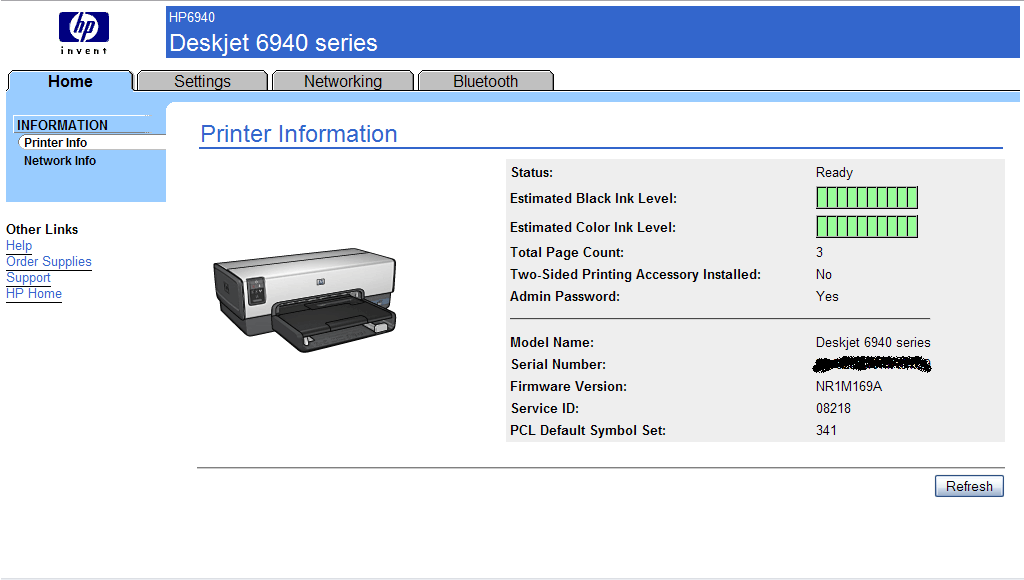
So far, if I were to review the HP DeskJet 6940, I would have to say that I am not impressed. The printing speed is no where near what HP claims, the driver is a bear to install (and also WILL NOT install on Windows Server 2003 with the CD provided) and its paper detection seems to be a bit off, as it drowned one of my high gloss office papers with ink. The advantages are a really nice web interface for configuration, overall an easy to use ink carriage and the prints are very smooth (no lines or roller marks). I’m not highly excited by the printer, but I will keep working with it, and try photo papers and stuff with it.

hp6940

Fuzzy Camera Math

I have been attempting to understand the way that zoom factors are determined for cameras. Have you ever noticed that compact cameras never share their lens focal in a prominent way and on an SLR you won’t find an zoom factor? That is because of two things, first, the size of the sensor on a compact camera, and second, because zoom factors are meaningless on SLRs.

Compact cameras use a zoom ratio to specify their lens range because with their sensor size, their actual lens size is irrelevant. Take for example, Chris’s new P90 has a zoom ratio of 24x, but his physical focal length is 110.4mm. Because of his sensor size, he has an angle of view that is more like a 624mm lens when compared to a “full size” (35mm) sensor. It is much easier to just say that his lens is 24x, since his high end is 110.4mm and low end is 4.7mm, but yet he can get a closer image than my 200mm lens.

SLRs are where the fuzzy camera math gets really fun. Everything is relative on the lens, not on the sensor (since most DSLRs use a crop factor of either 1.5 or 1.6). I am considering buying a 70-300mm Nikon lens for my camera, which has an advertised zoom factor of 4.2, but yet my full kit has a crop factor of 11x, even though my longest focal length is only 200mm. Being confused by how we arrived at this particular set of numbers I decided to dive into how the numbers are calculated. Lenses are apparently measured for zoom factor based on dividing the maximum length by the minimum length. The zoom factor of a system is done by using the maximum of all the lenses and dividing by the minimum focal length of all the lenses.

For my system we get this:

Lens Range Zoom Factor System Factor
18-55mm 3x 3x
55-200mm 3.6x 11x
70-300mm 4.2x 16x


Thinking about this, zoom factor is a really sucky way to measure how far a camera can see, since the wide factors are included with this ratio as well (wide… anything below the 35mm standard “normal”, which is 50mm). Some cameras start somewhat longer than “normal”, which means they have a less impressive zoom number, even though they could have a farther reach than a camera that may have a more impressive number, that could fall short on actual distance. The problem here is “zoom” ration/number. It doesn’t measure zoom, it is simply the focal length ratio, but I guess only a Radio Shack geek could make a large focal length ratio seem impressive.

Just for fun, here is a cool link: http://www.digified.net/focallength/. This site will calculate the equivalent ranges to standard for almost any camera. To get an idea of how far the reach of a camera is, figure out its standardized maximum focal length, and then divide that by 50mm, which will be a ratio against “normal”, there you will have your true zoom ratio, and not just the focal length ratio.

On my system, this looks like this:

Lens Standard Maximum Amount of Zoom
18-55mm 82.5mm 1.65
55-200mm 300mm 6
70-300mm 450mm 9


I can even apply this formula to Chris’s bridge camera:

Lens Standard Maximum Amount of Zoom
4.7-110.4mm 624mm 12.48


And as is clear from this chart, I am still underpowered when it comes to comparing my camera to Chris’s, but I am told that SLRs have advantages over compact/bridge cameras. I won’t be the first Nikon photographer to wish that the lens for the P90 was available in f-mount (the mount type on all Nikon SLRs).

Bacon Fried Chicken and Gravy

  • 4 Breasts Chicken, boneless
  • 6 Ounces Bacon, chopped
  • 10 Stems Chives, 6 inch
  • 2 Tbsp Corn Starch
  • 14 Ounces Chicken Stock
  • Black Pepper, to taste

Fry bacon in large non-stick skillet or fryer. Fry until crisp and fat pools. Remove remaining bacon solids, set aside to cool. Split chicken breasts to divide mass in half, making roughly square portions. Keep pan at at least 300 degrees. Place divided breasts, bone side down, into the hot bacon fat. Cook for about 5 minutes, then verify brownness (top side should be beginning to turn white). Once brown (or golden caramelization), turn breasts over and repeat on opposite side. Once fully cooked, move chicken on to a broiling pan and place into preheated 350 degree oven.

Crumble or mince cooled bacon pieces to the desired texture. Chop chives. Place bacon and chives into a small sauce pan. Heat on low to reactivate remaining fat in bacon. If any drippings or "pan goodies" remain in fryer, deglaze by pouring chicken broth into hot pan, the liquid should sizzle instantly (if it doesn’t, then pan is not hot enough). Gently scrape bottom of fryer to remove any stuck "bits". Cool slightly and pour liquid into sauce pan, add corn starch, salt and pepper. Whisk vigorously until starch is mixed in, then bring to a boil. Gravy will slowly thicken. Once at the desired texture, remove from heat, take chicken out of the oven and serve.

Serving suggestion: with rice.

Preparation Time:
10 minutes

Cooking Time:
25 hours

Yield:
4 servings

Category:
Chicken

Added on Monday, May 25, 2009

Bought A Printer

I just bought a printer. Its the HP Deskjet 6940 Color Printer. I bought it for photo printing primarily. The only color printing that my Dell 3100cn sucks at is color, and I was able to get this printer for $40 from NewEgg. This isn’t exactly an Epson photo printer, but I suspect for my tasks it will be pretty good. I want to be able to have printed photos without having to send something out to be done. Probably crazy, considering how cheaply I can get photos printed now, but is a cool network printer that I have no idea where I am going to place it.

Biopsychology Off To An Interesting Start

My correct Biopsychology textbook arrived today, via US Mail, so I got started on the course. The first quiz, due on Tuesday, has been finished, so now I can relax and work on getting ahead in the course. The instructor who wrote the course is not the same as the instructor who is teaching the course, although, we have him for a little while with him until the new instructor is finished with his Blackboard training.

One of the cool things about Dr. Van is he does not stay strictly with the “normal” course material, as can be seen in his choice of video for the brain anatomy overview he selected for our second set of lectures: