Recently when I shot the moon, I did so in RAW, so I get a few options in post-processing for how I wish the white balance to be. Anyone got any opinions on which one looks best?
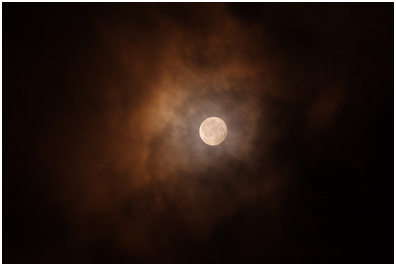
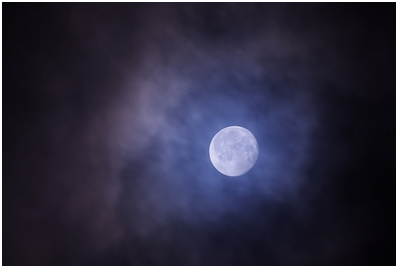
Recently when I shot the moon, I did so in RAW, so I get a few options in post-processing for how I wish the white balance to be. Anyone got any opinions on which one looks best?
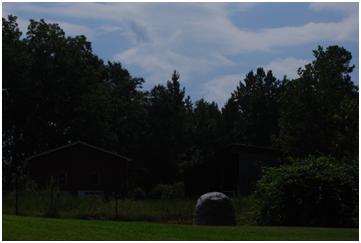
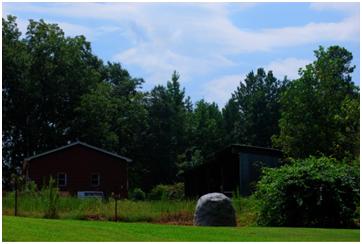
Recently I have been working with a technique for digital photography called “high dynamic range”, which essentially takes the highlights from one image and matches them with the shadows from another image shot in the exact same position in a different exposure value. There is also another process that can be applied to an HDR image called tone mapping, that I don’t really know what it is yet, but it produces interesting results. Fusing is another related process to HDR, except it isn’t truly a high dynamic range, it is just fusing various segments from the images and creating a composite image. These images are supposed to appear more natural than the originals, but so far, I am having difficulty with that particular aspect of HDR. I suspect I am not selecting images that are far enough apart representing enough of the range needed to develop the final images, or I simply do not know which sliders to roll to get my desired result.
|
Individual Exposures
|
HDR + Tone Mapped Composite
Fused + Tone Mapped
|
As many of my readers are aware, I like to do macro photography. This tends to be an interesting lighting situation to stabilize, since macro needs a really narrow aperture for the wide depth of field required to focus something so physically close to the lens. In most difficult situations for photography, the first line of defense is a flash of some type, whether it be a light box, on-camera flash, or remote flash system. The problem with this is that all of these methods can be interfered with too easily, and some (such as remote and light box) are hard to move around for fast-moving subjects. One of the best solutions developed for this problem was the ring-flash, a simple flash unit that attaches to the front of the lens. If you recall from a previous post, regarding flash, having flash and lens on the same plane can cause red eye and other problems. It is also a very direct, which depending on subject, distance and reflections, can be very harsh. Another flaw I found out about earlier today is that some lower end models have short lifespans, 100-200 flashes maximum. Not a very long-lasting device (especially at $150), considering I will sometimes shoot 500 or more exposures in a day. Originally I considered one of these flashes , but have now changed my mind. Another option for macro lighting is a different type of on-lens lighting system, such as Nikon’s R1 close up lighting system. The lights move with the camera, has a separation from camera and subject (which is adjustable, unlike ring-flashes) and can be used to command other flash units (such as a subordinate SB-600).
As a result of the absolutely crappy performance of the low-end ring flashes, and the expense of the Nikon R1 system (and the fact it is only compatible with Nikon cameras that have full CLS support), I will be waiting before obtaining a flash unit for macro and close up shots.


I thought for sure after my Summer additions to my “system” I would be finished for a while, but it seems a few things have cropped up that I feel compelled to deal with.
|
|
|
|
|
Lowepro TopLoader |
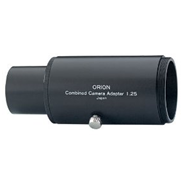
Orion Universal Camera Adapter |
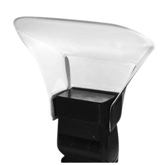
LumiQuest Pocket Bouncer |
|
I have been on an endless search for a new camera bag, something that would allow me to carry all of my accessories and be ultra flexible, etc. That bag does not exist and never will due to certain inconvenient laws of physics. On the other hand, this bag takes care of the portable aspect and will allow me to carry my camera with my long zoom lens comfortably installed as well as has room for me to attach additional lenses on the side and a pocket for my Lens Pen. |
Before considering taking the great plunge of getting a new telescope for astrophotography (due to focus issues) I am considering using this little gem to adjust my focus and allow me to shoot through one of my telescope’s eyepieces. It’s not a fix-all type of device, since I will still be limited in the ability to track an object for long exposure, but chances are, no matter what I do as far as a scope, I will require this adapter to make my life simpler. |
When I found out about this device I wanted to scream. I have been bouncing from ceilings since July when I got my SB-600, and trying to use my diffuser cap when in situations where the bounce was impractical. Now I have found this device and I wonder, why did I not think to look for a product like this before? I have seen some photographers recommend using an index card taped to the flash instead of this, but my thought there is 1. Little too tacky, 2. Little too sticky to put on my flash and 3. That flash gets way too hot for paper that near to it. |
On the positive side of things, I have developed a criterion on which my decision to upgrade the body in my system will be based. I shall obtain a new SLR body whenever I encounter a situation where the body is the limitation to me not getting a shot, or when the total cost of accessories needed to meet my wants meet the cost of the new body. At the moment I can only identify about $450 of a $1,200 body, so it might be a while.
I have selected and been confirmed for two of my research topics for this Fall.
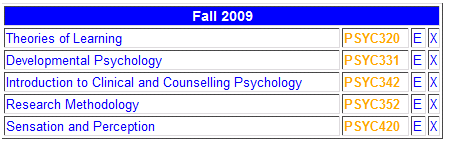
Theories of Learning (PSYC 320): Topic 20: Behavior modification and insomnia
Developmental Psychology (PSYC 331): Topic 21: The development of gender identity in children raised by homosexual couples
I hope I have selected topics that will be able to be worked on in a logical way. I did not intentionally select sequential topic numbers, just sort of happened.
Most accurately, direct flash is the enemy of good photographs. If there is one thing I have learned about photography, it is that it is all about light. If you have bad light, you have a bad photo. Flash can make things look unnatural or cast horrible shadows. This topic comes up because I was just browsing Flickr and discovered that there were a lot of images of guys taken at night that were really bad. A lot of otherwise really cute guys looked sickly or drunk, all because of bad lighting. The issue comes from the fact that at the end of the day a lot of guys get this really unique glow to their skin, flash will make that glow look like the guys are just dropping wet, and not in a good way, however, natural light, especially near sunset, gives these guys a warm, appealing glow, almost angelic, except in a whole different way. The problem is that in general, the proper lighting is not enough light for the camera.
There are several ways to solve the direct flash issue,
Its nearly 11am and I have not been to bed yet, so if this is TMI or in any way incoherent, I apologize, but then again, this is my blog, what did you expect?
Once again I have a class with Dr. Hogan and we start off day one with selecting our topics. This is for Theories of Learning.
Which topic would you pick?
Topic 1: The cerebral cortex and memory
Topic 2: Habituation
Topic 3: The orienting response
Topic 4: Classical conditioning and conditioned emotional responses
Topic 5: Classical conditioning and spontaneous recovery
Topic 6: Backward conditioning in classical conditioning
Topic 7: Systematic desensitization of phobias
Topic 8: Aversive conditioning of alcoholism
Topic 9: Aversive conditioning of smoking
Topic 10: Aversive conditioning of drug abuse
Topic 11: Classical conditioning of bedwetting
Topic 12: Operant conditioning and superstitious behavior
Topic 13: Operant conditioning and shaping classroom behavior
Topic 14: Operant conditioningand toilet training
Topic 15: Operant conditioning and teaching language to autistic children
Topic 16: Token economies in inpatient mental health facilities
Topic 17: Token economies in classrooms
Topic 18: Learned helplessness
Topic 19: Biofeedback and pain control
Topic 20: Behavior modification and insomnia
Topic 21: Chunking
Topic 22: Teaching language to animals
Topic 23: Imitation of Achievement Motivation
Topic 24: Imitation of aggression
Topic 25: Television violence and aggressive behavior
Topic 26: Violent video games and aggressive behavior
Topic 27: Behavior modification of self-control
Topic 28: Observational learning of motor skills
Topic 29: Knowledge of Performance in motor skills training
Topic 30: Choice behavior
Five years ago, on August 23, 2004 I began my undergraduate academic career. At the time I was planning an academic adventure that would last at most 4 years, but was suspected to be closer to 3 years. I had credits ready to go and was almost a sophomore, and I had not been to a university before. At the time 120 credit hours seemed like a lot, like it would take forever to earn. Here I am, a senior, so far from where I began. I have been a senior for quite some time now, over a year actually, but without an appropriate plan, being a senior does not mean anything. Today, it means something. I consider myself to be a terminal senior this year, as I will progress beyond the confines of an undergraduate education. In a lot of ways, I am just as scared as I was 5 years ago, maybe more so, since a lot of the variables of the situation have changed. Things seemed certain back then. I knew what I wanted to do, or at least, I thought I did, I wanted to be involved in computer science and programming and all that is technical. With meeting of people, taking a variety of classes and ultimately deciding that technology is cold and unemotional, I have set out on a new course, one which is more compatible with my goals. I suppose with the way I leaned toward social sciences more than tech courses for things, I should have known that there was more to me than computer science could ever cover. These five years have been an interesting journey that I believe has allowed me to better understand myself than taking the “express route” to a degree ever would have. By allowing myself to explore the arts and begin to develop new interests I have moved far beyond the person I was in high school. I feel as though my eventual career will not be directly related to my degree, but that my degree will determine my success in my career. At this point in a person’s academic career, it is expected that the person be ecstatic about reaching the natural conclusion to such an academic career. I do not have that feeling. I am excited, but at the same time, I am saddened that the predetermined path (the degree outline, or curriculum) is ending and as a result, my ability for free exploration of the academic realm is also ending. It has been quite a surprise to me how much I have learned about myself through this experience, things I would have not otherwise known.
Today I begin the penultimate semester of my undergraduate career with this schedule:
What comes after I have completed this academic year I have no clue. I do feel as though I am ready to move beyond academics, but at the same time, not completely abandon it. I want to go to graduate school to obtain a higher degree in psychology, but I would also like to explore a 2nd degree option for obtaining a BFA and obtaining a degree which explores my other major interest (photography). I do not foresee a need to close this blog, or even to supplement it at the conclusion of the year, but then again, that is 9 months away.
In the past five years I have matured a lot intellectually as well as emotionally. Most importantly, I have learned that there is not some pre-defined plan that everyone must follow in order to have a happy and successful life. I have learned that everything is different for everyone. My “scenic route” to a degree is not necessarily a bad thing, it is just different from the way most people would choose to work at a degree. I never really built many interests as a kid, and my academic pursuits have allowed me cover some missed ground and become more able to know myself. Although, it was a very tiring and frustrating thing to attempt to reinvent myself every time I found a new interest. I had not known before that a person can have many interests and pursue them all without necessarily having to lose any of the previous interests to make room for it.
Its hard to say what I might discover about myself in these next 16 credit hours, or what impact it may have on my life, but I am prepared for whatever happens.
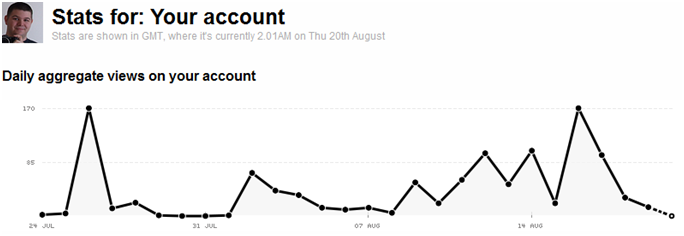
My statistics on Flickr have been surprising me lately, I have some days with very high view rates, then other days where there is an absolute slump. Two days ago I had almost 170 hits on my photostream, but today (ended at 8PM EDT), I only had 14. This trend is kind of odd. At first I thought there was a pattern between my uploading and the hits, but last week’s stats go against that. It seems to be all kind of random how many people visit my photos in a day, although, number of comments seems to be based on the freshness of things in my feed.
Having 32 spare bits, for a total of 64 is making certain pieces of software not work or install on my newest desktop. Last night I decided to install Windows 7 Professional on the desktop. Because the desktop is a 64 bit system, I decided to install 64 bit Windows. Turns out, that was a bad idea. It would appear that one of my favorite 32 bit games has a few 16 bit components, such as the installer, which are not supported in a 64 bit OS. I suppose because of progress I am supposed to simply accept this fate and move on to a new version, but unfortunately, there is no new version. MotoRacer is no longer produced, primarily because the company that made the game no longer exists, but worst yet, there are no other games that will substitute it adequately. There are also concerns with some hardware not having supported drivers on the 64 bit platform.
I installed Windows 7 Professional 64 bit, but unfortunately, it did not quite work out for me, so I am now back to running Windows 7 Professional 32 bit for now.