One of the most difficult things I have found is giving titles to photographic work. When I upload to Flickr I tend to do it all as a batch in a rather unpolished kind of way. I don’t tag and I don’t title. It’s just there, for the taking. Some of my photographs I have tried to title, but keep coming up blank or with things that are just way too simple and without meaning, such as “Small Red Flower” or “Water on Leaf”. Its just not something I am good at yet. In titling most work, the most important thing is to find a unique feature and go with it, but it is hard to make a succinct title describing the effect of light on a subject and to embody the subtle details of the camera grain with the shadows, or any other type of unique feature. Not titling work does work for me, but whenever I have to have a title, such as in Flickr, and I simply leave the file name, it just seems to lazy of me. I suppose I must find a way to break through this non-naming phase and allow myself to apply labels to my work.
Category: Photography
-
Difficulty In Taking a Family Portrait
I believe portrait photography to be the hardest form of photography there is, now imagine applying that principle to 21 people, plus one dog. First of all, in this situation, I find that the more legs a subject has, the more cooperative they are. There are many things to consider when taking a portrait, the least of which is whether or not the subjects have their eyes open. The first is, do all of the subjects know that they are being lined up for a photograph? Sometimes this information is helpful to them, as it may encourage them to face the camera. Next, once the subjects have identified the direction of the camera, do they know that they are not actually in front of a firing squad, check this, as it may comfort some of the subjects. There are some subjects that may only be in the picture as a result of someone else’s encouragement, these people tend to hide. Another issue occurs when you don’t have a set of bleachers nearby to stack everyone neatly, so that there are no tall people and short people. In a group of strangers I understand not knowing your height relationship to everyone, but in this case, everyone has known everyone for quite some time, so why is it there are still short people in the back and relatively tall people in the middle? It is just very difficult to get 21 people together to do one activity, even if you only need them to be cooperative for 1/250th of a second.

Did I mention this photograph was taken at the encouragement of my aunt (the lady hiding behind the baby with the volcano of hair)?
The problems with this portrait are:
- 3 people wearing sunglasses
- 2 children looking away
- 1 guy looking like a statue (in 5 attempts to take the shot, he didn’t move once)
- 1 women barely visible
- 1 photography who doesn’t hide his remote shutter release very well
-
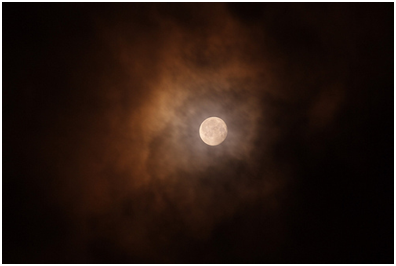
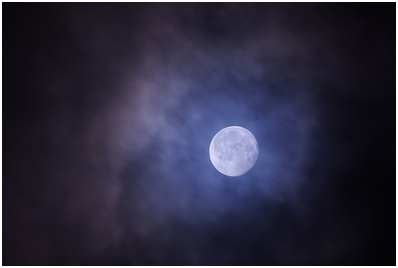
Moon White Balance
Recently when I shot the moon, I did so in RAW, so I get a few options in post-processing for how I wish the white balance to be. Anyone got any opinions on which one looks best?
-
High Dynamic Range
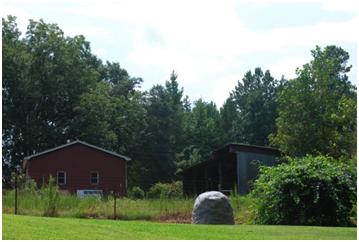
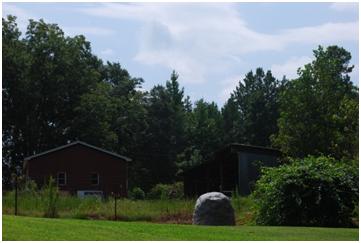
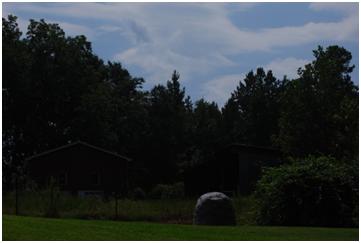
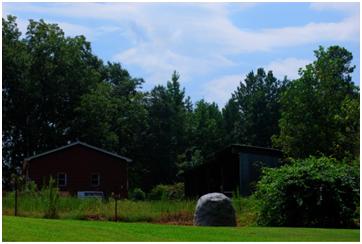
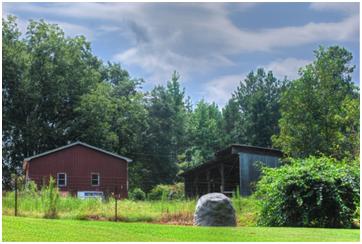
Recently I have been working with a technique for digital photography called “high dynamic range”, which essentially takes the highlights from one image and matches them with the shadows from another image shot in the exact same position in a different exposure value. There is also another process that can be applied to an HDR image called tone mapping, that I don’t really know what it is yet, but it produces interesting results. Fusing is another related process to HDR, except it isn’t truly a high dynamic range, it is just fusing various segments from the images and creating a composite image. These images are supposed to appear more natural than the originals, but so far, I am having difficulty with that particular aspect of HDR. I suspect I am not selecting images that are far enough apart representing enough of the range needed to develop the final images, or I simply do not know which sliders to roll to get my desired result.
Individual Exposures
HDR + Tone Mapped Composite
Fused + Tone Mapped
-
Macro Lighting Options
As many of my readers are aware, I like to do macro photography. This tends to be an interesting lighting situation to stabilize, since macro needs a really narrow aperture for the wide depth of field required to focus something so physically close to the lens. In most difficult situations for photography, the first line of defense is a flash of some type, whether it be a light box, on-camera flash, or remote flash system. The problem with this is that all of these methods can be interfered with too easily, and some (such as remote and light box) are hard to move around for fast-moving subjects. One of the best solutions developed for this problem was the ring-flash, a simple flash unit that attaches to the front of the lens. If you recall from a previous post, regarding flash, having flash and lens on the same plane can cause red eye and other problems. It is also a very direct, which depending on subject, distance and reflections, can be very harsh. Another flaw I found out about earlier today is that some lower end models have short lifespans, 100-200 flashes maximum. Not a very long-lasting device (especially at $150), considering I will sometimes shoot 500 or more exposures in a day. Originally I considered one of these flashes , but have now changed my mind. Another option for macro lighting is a different type of on-lens lighting system, such as Nikon’s R1 close up lighting system. The lights move with the camera, has a separation from camera and subject (which is adjustable, unlike ring-flashes) and can be used to command other flash units (such as a subordinate SB-600).
As a result of the absolutely crappy performance of the low-end ring flashes, and the expense of the Nikon R1 system (and the fact it is only compatible with Nikon cameras that have full CLS support), I will be waiting before obtaining a flash unit for macro and close up shots.


-
Expanding the Photographic Kit Yet Again
I thought for sure after my Summer additions to my “system” I would be finished for a while, but it seems a few things have cropped up that I feel compelled to deal with.
Lowepro TopLoader
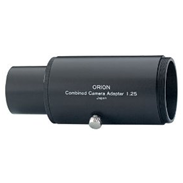
Orion Universal Camera Adapter
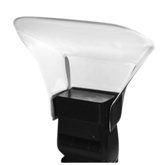
LumiQuest Pocket Bouncer
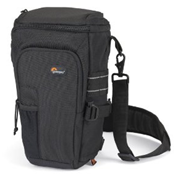
I have been on an endless search for a new camera bag, something that would allow me to carry all of my accessories and be ultra flexible, etc. That bag does not exist and never will due to certain inconvenient laws of physics. On the other hand, this bag takes care of the portable aspect and will allow me to carry my camera with my long zoom lens comfortably installed as well as has room for me to attach additional lenses on the side and a pocket for my Lens Pen.
Before considering taking the great plunge of getting a new telescope for astrophotography (due to focus issues) I am considering using this little gem to adjust my focus and allow me to shoot through one of my telescope’s eyepieces. It’s not a fix-all type of device, since I will still be limited in the ability to track an object for long exposure, but chances are, no matter what I do as far as a scope, I will require this adapter to make my life simpler.
When I found out about this device I wanted to scream. I have been bouncing from ceilings since July when I got my SB-600, and trying to use my diffuser cap when in situations where the bounce was impractical. Now I have found this device and I wonder, why did I not think to look for a product like this before? I have seen some photographers recommend using an index card taped to the flash instead of this, but my thought there is 1. Little too tacky, 2. Little too sticky to put on my flash and 3. That flash gets way too hot for paper that near to it.
On the positive side of things, I have developed a criterion on which my decision to upgrade the body in my system will be based. I shall obtain a new SLR body whenever I encounter a situation where the body is the limitation to me not getting a shot, or when the total cost of accessories needed to meet my wants meet the cost of the new body. At the moment I can only identify about $450 of a $1,200 body, so it might be a while.
-
Flash: Number One Enemy of Good Photos
Most accurately, direct flash is the enemy of good photographs. If there is one thing I have learned about photography, it is that it is all about light. If you have bad light, you have a bad photo. Flash can make things look unnatural or cast horrible shadows. This topic comes up because I was just browsing Flickr and discovered that there were a lot of images of guys taken at night that were really bad. A lot of otherwise really cute guys looked sickly or drunk, all because of bad lighting. The issue comes from the fact that at the end of the day a lot of guys get this really unique glow to their skin, flash will make that glow look like the guys are just dropping wet, and not in a good way, however, natural light, especially near sunset, gives these guys a warm, appealing glow, almost angelic, except in a whole different way. The problem is that in general, the proper lighting is not enough light for the camera.
There are several ways to solve the direct flash issue,
- Extend shutter time – this often causes blurry images, however, it does give the best chance for natural light to enter. Often not an option of compact cameras.
- Increase sensitivity – this puts grain into the image, but keeps a lot of color and isn’t as likely to blur as a shutter time extension. Often not an option on compact cameras (they already do this for the puny sensors)
- External bounce flash – this puts you in control of the light source, but if not used carefully, you are back to square one. Can often be bounced from any number of places, or diffused as needed. Almost no compact cameras have a hot shoe for the external unit.
- Diffusion – if you have flash, you have this option. Using a combination of paper plates, aluminum foil, clear plastic cups and anything else you can find that will diffuse light but not block it, you can bounce light around just enough to let it bounce around before hitting your subject, taking the light off your subject and adding to the ambient light level. Takes practice, but anybody can do it (although, having an assistant to hold the diffusion object in front of the flash is a good idea). Also, a safety note, do not put anything flammable or a human body part closer than about 3 inches from a flash bulb that will fire.
Its nearly 11am and I have not been to bed yet, so if this is TMI or in any way incoherent, I apologize, but then again, this is my blog, what did you expect?
-
Schizophrenic Flickr Traffic
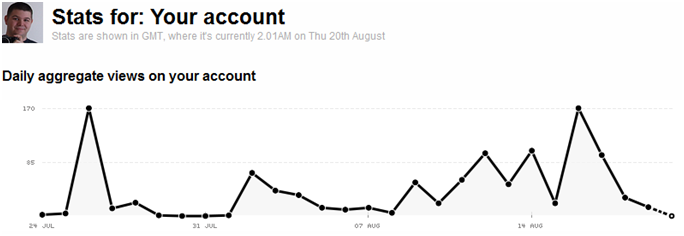
My statistics on Flickr have been surprising me lately, I have some days with very high view rates, then other days where there is an absolute slump. Two days ago I had almost 170 hits on my photostream, but today (ended at 8PM EDT), I only had 14. This trend is kind of odd. At first I thought there was a pattern between my uploading and the hits, but last week’s stats go against that. It seems to be all kind of random how many people visit my photos in a day, although, number of comments seems to be based on the freshness of things in my feed.
-
Finding Your Way in the Dark
Last night I began looking at Nikon’s GP-1 GPS Receiver that is designed to record GPS data directly to a D90, D300, D300S and other similarly classed cameras. I was looking at the device in a purely theoretical kind of way, since I would not need it until I acquire either a D90 or D300S camera, as the D60 does not support the direct data connection used by the device, the D90 barely does. My original conception of what this device is involved it sitting nearly on top of the hot shoe (external flash port), and perhaps it providing an additional port to pass power to a flash. No, that’s not quite how it works. The thing can be mounted on the hot shoe, but it does not use it, it connects by a 10 inch cable to the data port on the cameras and provides no additional port for a flash to be added. At $210 I question the value of this device. The only real benefit that this device has over a device that adds information about location to a picture after it is taken is that there is no next step, it is done immediately and seamlessly, but how good of a feature is that, really? GPS devices are known for being unreliable and this one is no exception to the rules of physics that cause that unreliable behavior. If you go in a building with the device, it won’t receive information or will give you bad information. Some other GPS devices that are designed for the same purpose (except do not talk to the camera directly) include a “hint” mode that you can use before entering a building, which causes it stick to the information it has so that it can geotag images taken in the building. One of the worst things about GPS is the ability for it to “jump” up to 50 feet because of an object bouncing the signal (accuracy is only about 10-15 ft even in an open field), this device will write that incorrect information directly to the picture, and there is no way to change it. As hard as it is to add information to EXIF, its worse to have to remove it. An external unit that does not write information directly to the camera will record a tracklog, which can be imported into many different types of software to do things such as create maps or apply an offset. That offset can be used to correct GPS positional data by hand. It is tedious, but the correct information will be used and you won’t have images that appear by their GPS data to have been taken in the middle of a lake, when you were really on a trail beside the lake. The only really positive attribute that I can think of for the GP-1 is that it is attached to the camera, so you always know that the information it has recorded is from where the camera was, give or take that 10 inch cable dangling it from the camera. One of the more obvious flaws that Nikon has even recorded in the manual is the absence of an on/off switch. The camera’s power state does not matter either, the device is still on and active, and drawing power from the camera. I feel that the worst trait of all on this device is that it sucks power away from the camera for its task, why can the device not have an independent power supply like flashes do?
In my quest for a GPS unit for my camera, I will be looking for something that is reliable, compact, discreet, fast and inexpensive (relative to the cost of the camera [should be more like 10% the cost, not 30%, I believe]). I would prefer to use devices made by my camera manufacturer, but I cannot do that when the only option is an inferior product to other products that are available on the market. I am presently looking at the GiSTEQ CD111 GPS Digital PhotoTracker. It is designed for use with cameras, since it has no independent display. It is a $75 device with no real display, it’s about the size of a battery for the D60 and it has its own independent power source that can operate it for 33 hours continuous operation. Cool thing about the device is once I have exhausted its battery, I can slide the thing into its cradle and it will charge. I don’t have to mess with batteries like I do for the Magellan. The device is as simple as that. It comes with software to tag images, but I will likely just stick with RoboGEO for that task.


Nikon GP-1
+ Directly records data
+ Always near camera
+ No Display
– No independent power source
– No power switch
– No method to correct data
– Unitasker – data is only good for the photos
– Expensive
– Only works with certain cameras
– Static data interval
+ Records tracklog (can be corrected)
+ On/Off Switch
+ Independent Power
+ Data for photos and other tasks
+ Works with all cameras
– AA batteries
– Unneeded display (battery drain)
– Difficult battery door
– Huge!
– Clunky internal software
– Static data interval
+ Records tracklog
+ On/Off switch
+Can turn on by vibration (no forgetting to use it)
+ Independent Power
+ Rechargeable Battery
+ Data for photos and other tasks
+ Small
+ No external display
+ Hint button
+ Works with all cameras
+Configurable data interval
-
Prime Focus
I have been looking at some images that I took this evening. They are mostly macro in nature (and of nature). I used my close up filter kit on top of the 18-55mm VR lens for the shots. Everything looked normal, except for my focal lengths. I used to do macro at between 50 and 55mm on that lens. Almost all of these images were between 34 and 36mm, which indicates to me that I have picked up a habit from another lens. Before today I had not used the 18-55mm lens for macro since the arrival of the 35mm lens, and only took it with me for the purpose of having a versatile zoom lens on the camera. I find it strange that I did this. All of those zoom levels available and I stuck to the composition that seemed “normal” to me, which is that of the other lens. I suppose I have become more attached to my prime lens than I originally thought possible. It was ordered as a “special purpose” portrait lens that was for portraits or in low light situations. The lens has been a quite valuable tool in low light, astrophotography, macro and a variety of other implementations. I can’t quite use it yet for bird watching, I believe that responsibility would fall upon its bigger cousin, the 600mm AF-S f/2.8, but at a cost of $10,000 I believe I will stick to taking macro insect shots and leave the birds to someone else to photo (although, a few weeks ago I got about 5 absolutely horrible shots of hummingbirds on my canna lily).